Best RO Systems
The 2026 Guide · Under-Sink Reverse Osmosis

Bottled-water clarity, from the tap you already own.

An under-sink reverse osmosis system is two purchases, not one: the unit you buy today, and the filters you'll rebuy for as long as you own it. We compared certifications, output, drain ratios and cartridge prices so you can judge both.

By Ilane Tall6 picks · 85 systems and cartridges comparedResearch-based — no testing lab, no invented scores

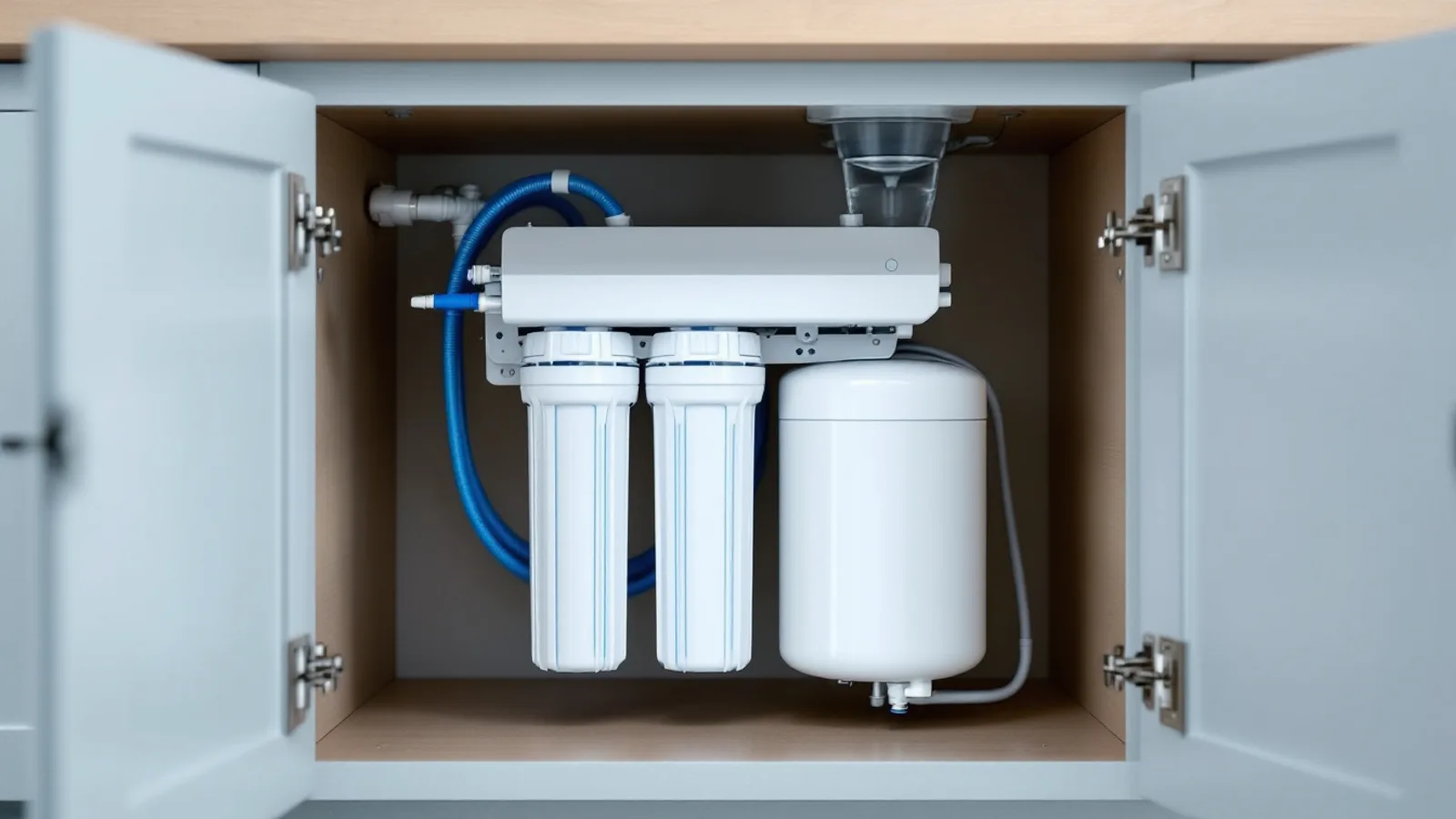
White under-sink reverse osmosis system with three filter cartridges and a storage tank installed inside a kitchen cabinet
The one to buy

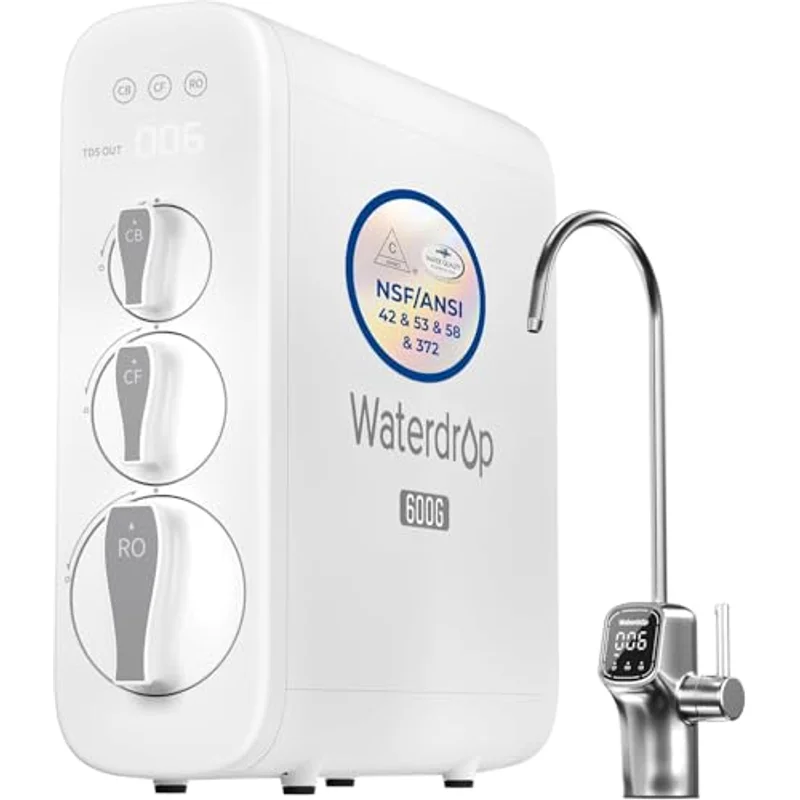
Waterdrop G3P600

The rare system that is certified for what it removes — not just for the plastic it's made of — while fitting in a cabinet with room to spare. 600 gallons a day, a 2:1 drain ratio, and a filter change that takes one twist.

NSF/ANSI 58·600 GPD·2:1 drain ratio·tankless
Check price on Amazon
Waterdrop G3P600 tankless reverse osmosis system with smart display faucet
Typical price
$439

Then about $60 a year for the front filter — the number most buying guides leave out.

Three filters, no tank, no tools.
— the twist-and-pull design owners keep singling out

Before you buy

Four things that decide whether you'll be happy

01

Cabinet space

A classic system is three housings plus a pressure tank — most of a cabinet. Tankless units are one slim box. Measure the space, including the depth behind your P-trap, before anything else.

02

Which certification

NSF/ANSI 372 only means lead-free materials. NSF/ANSI 58 is the one that certifies the system actually reduces dissolved solids. They are not interchangeable.

03

Drain ratio

RO sends part of your tap water down the drain. Older systems run 3:1 or 4:1 against you; the modern picks here are 2:1, and one is 4:1 in your favour. On a metered bill it adds up.

04

Filter economics

Cartridges are the real cost of ownership. Standard 10"×2.5" housings take generic sets from about $25; proprietary twist-in filters are quicker to change and cost more.

At a glance

How the six compare

Ordered by our recommendation. Prices move on Amazon — confirm the live price before buying.

ModelBest forTypeOutputCertifiedPrice
Waterdrop G3P600Best overallTankless · under-sink600 GPDNSF/ANSI 58 & 372$439.00Price
Waterdrop G2P600Best value tanklessTankless · under-sink600 GPDNSF/ANSI 372$299.00Price
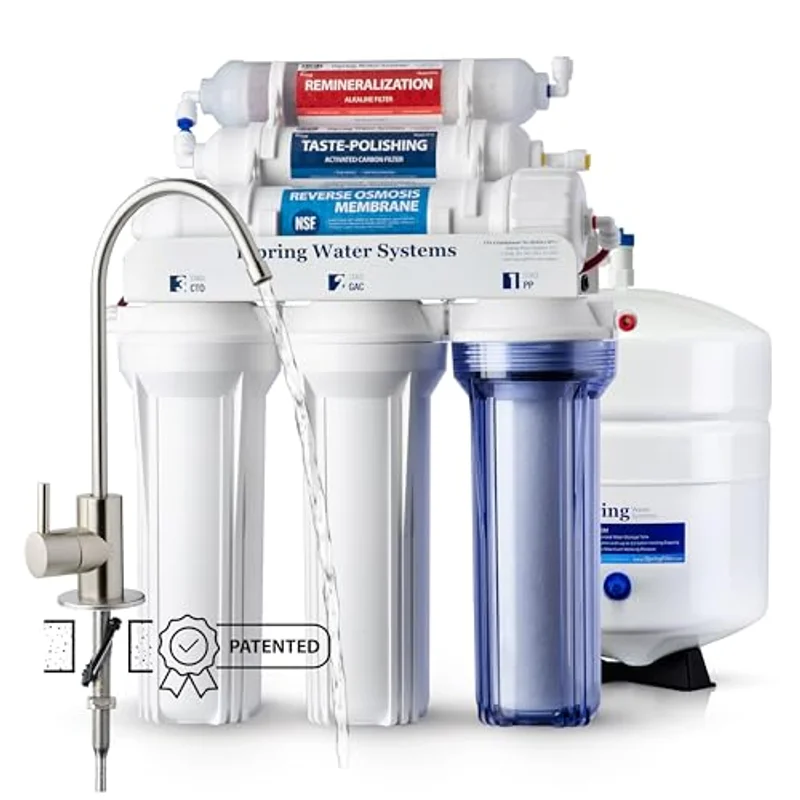
iSpring RCC7AK-BNBest cheap filtersTank · 6-stage alkaline75 GPDNSF/ANSI 58$198.76Price
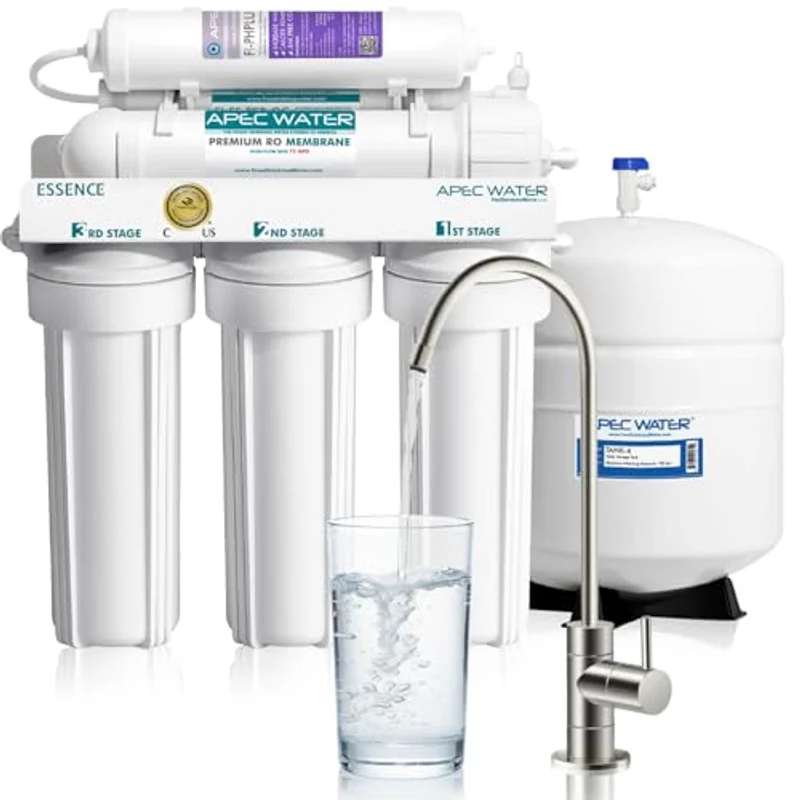
APEC ROES-PH75Best serviceabilityTank · 6-stage alkaline75 GPDWQA certified$239.99Price
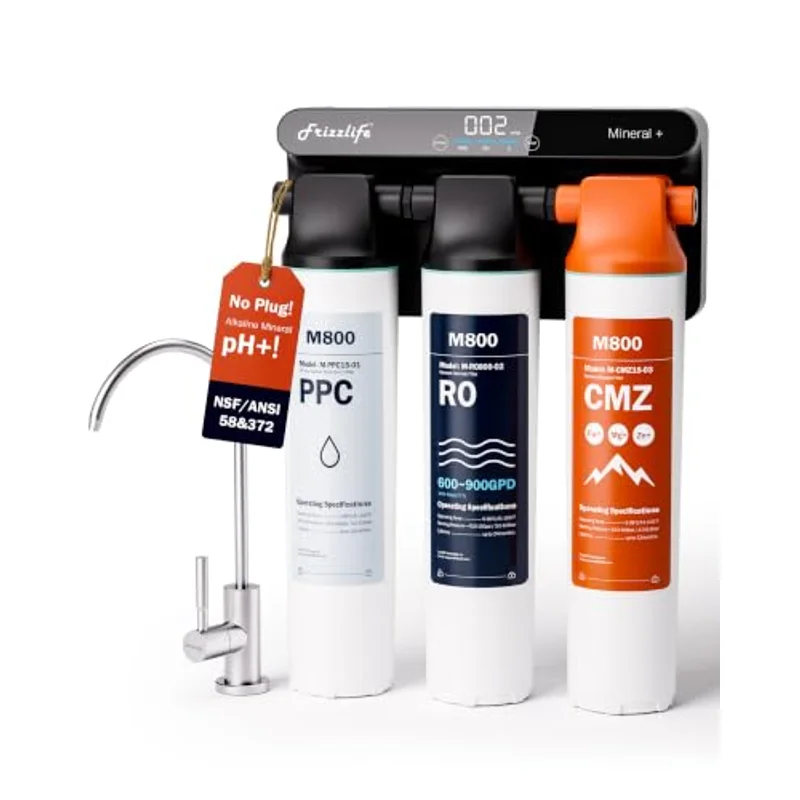
Frizzlife M800Best without an outletTankless · non-electricup to 900 GPDNSF/ANSI 58 & 372$299.99Price
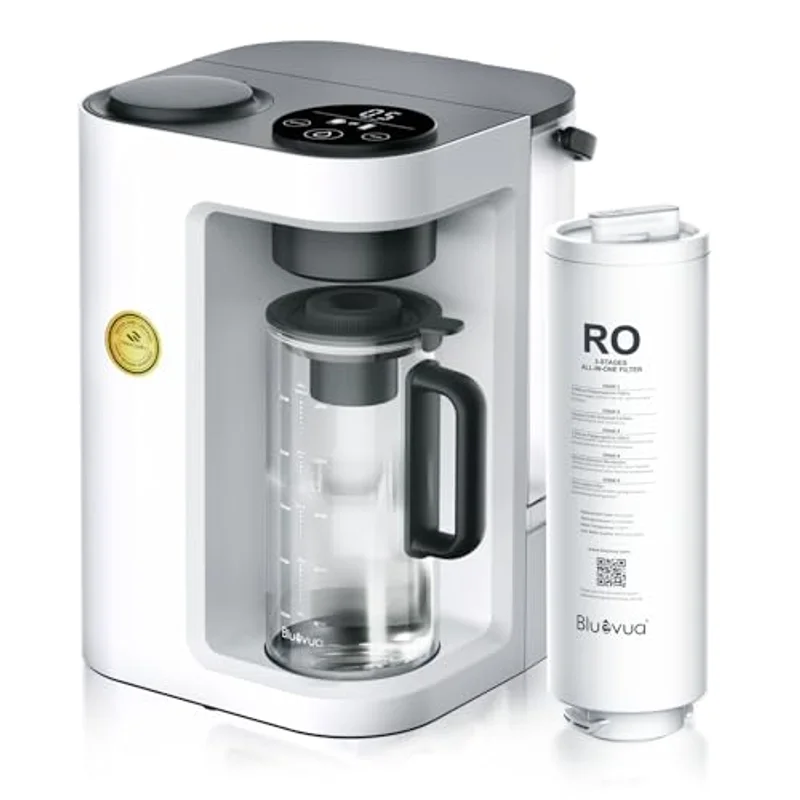
Bluevua RO100ROPOT-LiteBest for rentersCountertop · no installCarafe-fedWQA / NSF/ANSI 372$219.00Price
The picks

Our six, and who each is for

01Best overall

Waterdrop G3P600

For most kitchens
NSF/ANSI 58 · 600 GPD · 2:1 drain · 8 stages · tankless

Waterdrop's certification is the reason this one leads: NSF/ANSI 58 for TDS reduction plus 372 for lead-free materials, with third-party SGS testing behind the wider contaminant list. Practically, it's a slim box instead of three housings and a tank, the faucet displays live TDS and filter life, and a cartridge change is a three-second twist with the system still in place. The trade-off is proprietary filters and a plug — it needs an outlet under the sink.

The theme that repeats across owner reviews: it disappears into the cabinet, and the display removes the guesswork about when to change filters.
Waterdrop G3P600 tankless reverse osmosis system
$439
Tankless · 600 GPDCheck price →
02Best value

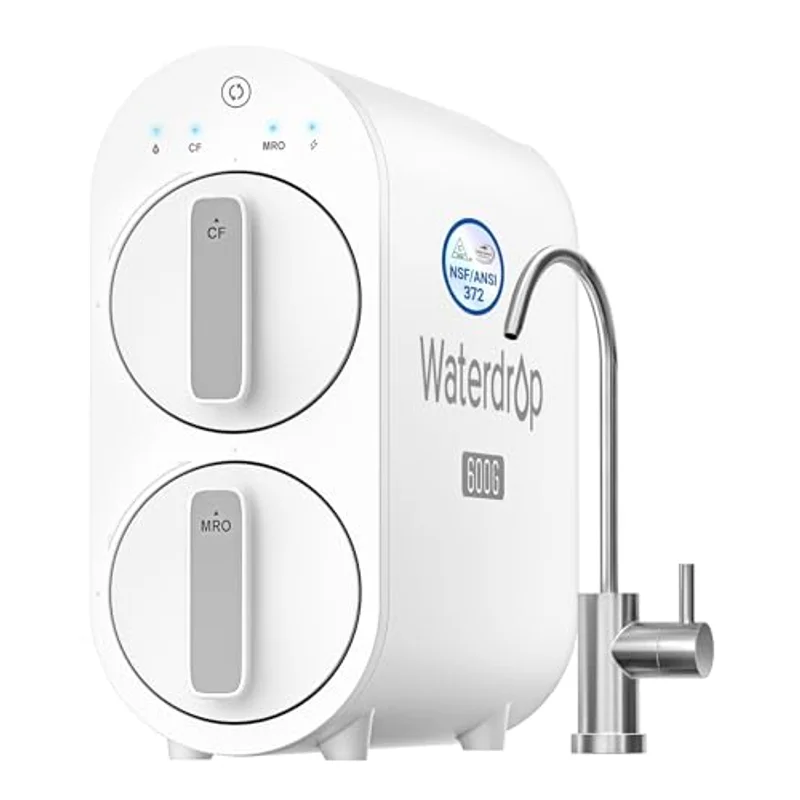
Waterdrop G2P600

The same footprint for $140 less
NSF/ANSI 372 · 600 GPD · 2:1 drain · 7 stages · tankless

The G2P600 keeps what most people actually feel — 600 GPD of flow, no storage tank, a 2:1 drain ratio, twist-in filters, a 30-minute install — and drops the extras. Be clear-eyed about the certification: it carries NSF/ANSI 372 for lead-free materials, not the 58 performance certification the G3P600 holds. If you're on treated municipal water and want the tankless form factor at the lowest sane price, this is the one.

The theme that repeats across owner reviews: it does the same everyday job as the flagship, and the missing display is the thing people notice least.

Waterdrop G2P600 tankless under-sink reverse osmosis system
$299
Tankless · 600 GPDCheck price →
03Cheapest to run

iSpring RCC7AK-BN

When the yearly filter bill matters most
NSF/ANSI 58 · 75 GPD · 6 stages · alkaline · tank

A classic tank system, certified as a whole system to NSF/ANSI 58, with the specification sheet to back it: iSpring publishes 93–98% TDS reduction and 96–99% PFAS reduction. It uses universal 10"×2.5" cartridges, so a full year of replacements is around $69 — the cheapest running cost in this lineup. The transparent first housing lets you see the sediment load, and the top-mounted faucet fastener means you tighten it from above instead of lying under the sink. It needs the space: three housings plus a tank.

The theme that repeats across owner reviews: install takes an afternoon, and the standard cartridges make it cheap to live with.

iSpring RCC7AK-BN 6-stage alkaline reverse osmosis system
$199
Tank · 6-stageCheck price →
04Best built

APEC Water ROES-PH75

Buy-it-and-forget-it hardware
WQA certified · 75 GPD · 6 stages · alkaline · tank

APEC's Essence line is the one plumbers keep recommending: heavy housings, long-life cartridges, a calcium remineralization stage, and a parts catalogue that still exists years later. The pre-filter set is a $25.46 three-pack changed twice a year, which keeps the running cost sane, and everything is standard-size so you're never hostage to one brand. It's a WQA-certified system rather than NSF/ANSI 58 — a different certifying body, and worth knowing the difference.

The theme that repeats across owner reviews: it is quiet, it keeps working, and replacement parts are easy to find years after purchase.

APEC Water ROES-PH75 6-stage alkaline reverse osmosis system
$240
Tank · alkalineCheck price →
05No outlet

Frizzlife M800

Tankless without a plug — and the best drain ratio here
NSF/ANSI 58 & 372 · up to 900 GPD · 4:1 pure-to-drain · non-electric

Almost every tankless system needs a pump and therefore an outlet. The M800 runs on your existing line pressure instead, which makes it the answer for cabinets with no power — and it still posts the best efficiency in this group at 4:1 pure-to-drain, the inverse of the older systems that waste three gallons for every one they make. It adds minerals back and shows TDS and filter life on the faucet. Measure first: at 14.5 × 5.1 × 19.7 inches it is tall, and it wants decent incoming pressure to hit its rated flow.

The theme that repeats across owner reviews: no cord, no tank, no noise — and the water-waste number is the reason people chose it.

Frizzlife M800 non-electric tankless reverse osmosis system
$300
Non-electricCheck price →
06Renters

Bluevua RO100ROPOT-Lite

RO water without touching the plumbing
Countertop · 7 stages · UV · carafe · plug-and-play

If you can't drill a faucet hole or tap a drain line, this is the way in: fill the reservoir, press a button, and it fills a glass carafe with RO water. Seven stages including UV, a filter-life display, and a footprint about the size of a coffee maker — Bluevua positions it for one or two people, which is honest, and puts replacement at one filter a year. Read its certification carefully, as with every countertop unit: the listing claims WQA certification against NSF/ANSI/CAN 372, which covers lead-free materials rather than contaminant-reduction performance. You also give up the endless on-demand supply of a plumbed system and you'll refill the tank by hand — but nothing about it is permanent, and it moves with you.

The theme that repeats across owner reviews: it replaced the bottled-water delivery, and setup was over in the time it took to rinse the carafe.

Bluevua RO100ROPOT-Lite countertop reverse osmosis water filter with carafe
$219
CountertopCheck price →
The part nobody shows you

What the filters cost after year one

Every RO system is a subscription in disguise. These are the actual replacement cartridges for three of our picks, at the prices we recorded — the honest way to compare two systems whose sticker prices look identical. See the full cost breakdown →

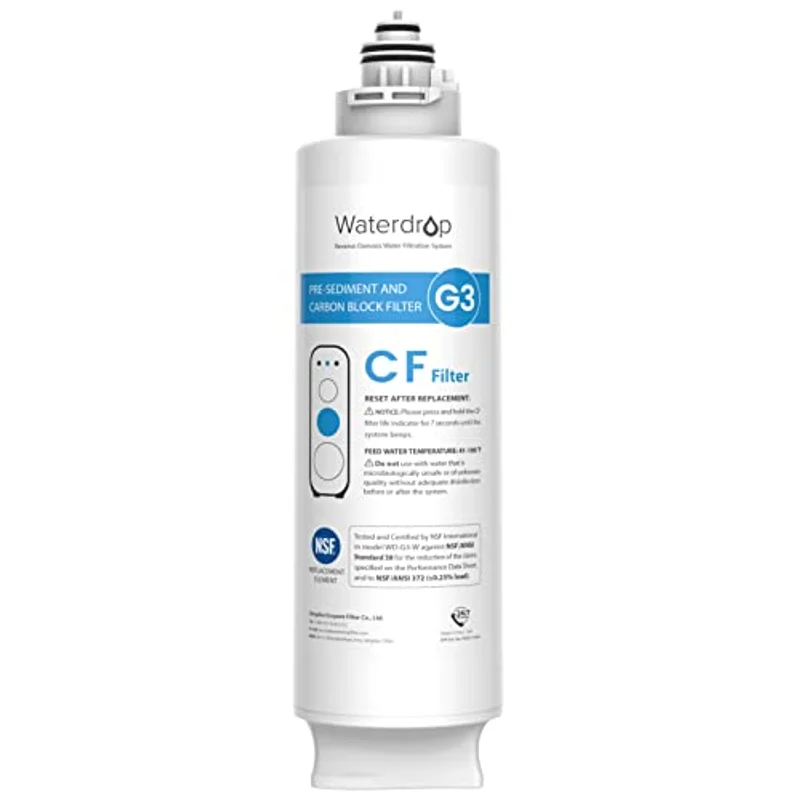
Waterdrop G3-N1CF replacement filter cartridge

Waterdrop G3-N1CF

$29.99

The 3-in-1 front filter for the G3P600 and G3P800. Rated for six months or 550 gallons, so budget two a year on top of the less frequent membrane change.

Check price →
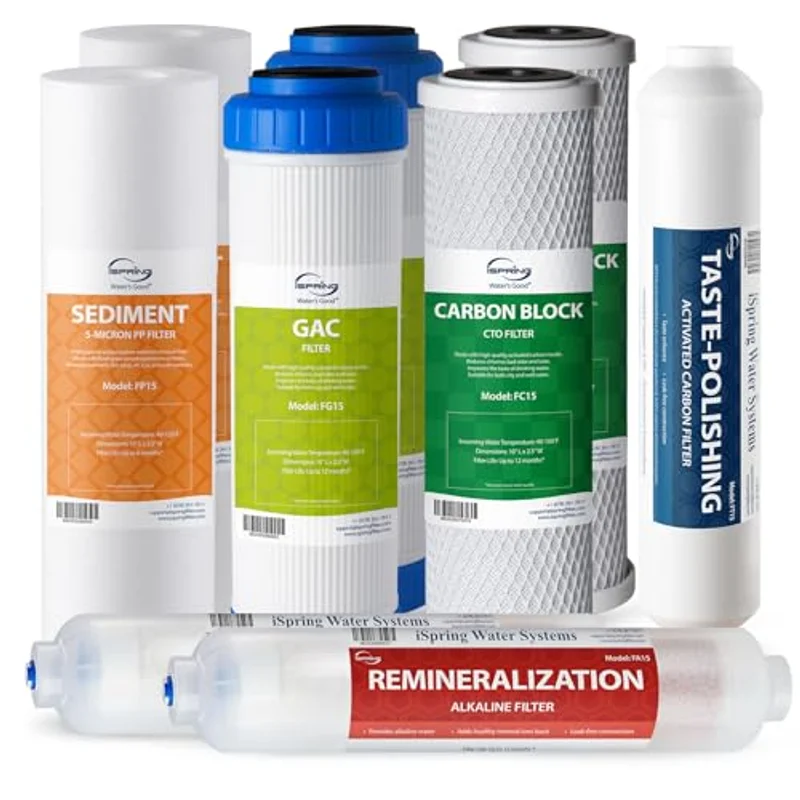
iSpring F9K one-year replacement filter set

iSpring F9K, 1-year set

$69.24

Nine cartridges — a full year for a 6-stage system, alkaline stage included. The RO membrane is not in the box; that one lasts two to three years and is bought separately.

Check price →
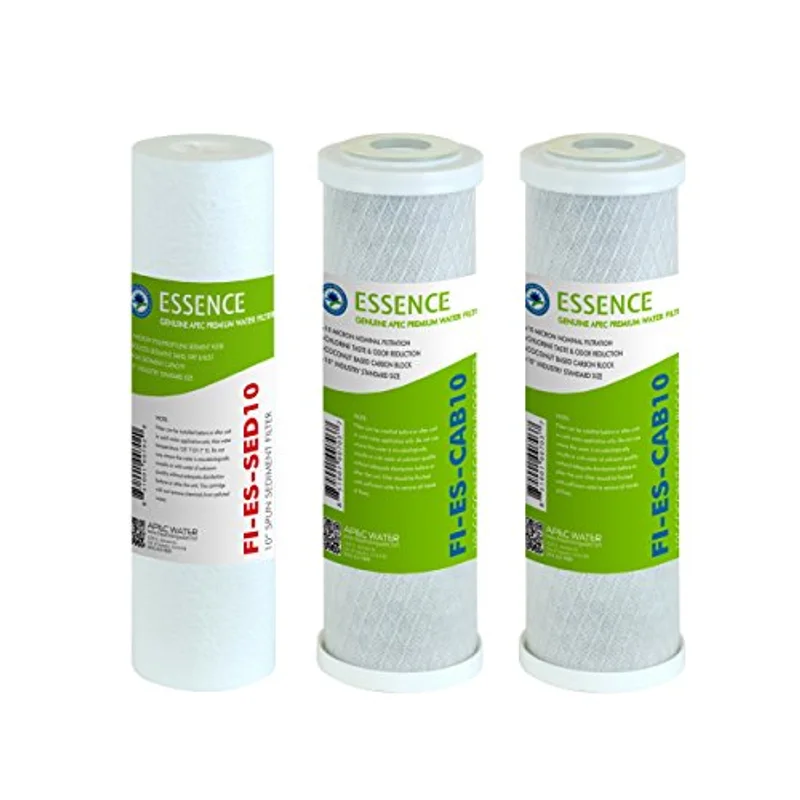
APEC FILTER-SET-ES replacement pre-filter set

APEC FILTER-SET-ES

$25.46

Sediment plus two carbon blocks for the ROES series, changed every six months. The cheapest routine maintenance here — the price of standard 10-inch housings.

Check price →
How we picked

85 systems and cartridges in, six out

We pulled every reverse osmosis system, under-sink filter and replacement cartridge we could source from Amazon's catalogue, then kept the ones with a complete published specification: rated output, drain ratio, stage count, cartridge part numbers and a named certification. Systems whose only claim was a marketing percentage went out. We deliberately chose across form factors — tankless, tank, non-electric and countertop — because cabinet space and a nearby outlet decide this purchase more often than filtration does.

How we compared

Research, not a lab

We're honest about this: we don't physically test these systems and we don't run a testing lab. We compare published specifications, third-party certifications, live pricing and the cost of every replacement cartridge, and we read the critical owner reviews closely, because the complaints are where the real trade-offs live. Amazon no longer exposes star ratings through its product API, so you will not find invented scores or rating badges anywhere on this site.

Go deeper

Guides worth your time

Everything you need to choose, cost out, fit and live with a system. View all guides →

FAQ

Common questions

Do I need a plumber to install one?

Usually not. An under-sink system connects to the cold-water line with a self-piercing or compression feed valve, drops a drain saddle onto the waste pipe, and needs a hole for the dedicated faucet — most sinks already have a spare hole for a sprayer or soap dispenser. Budget two to three hours the first time. Where people do call a plumber is when the sink has no spare hole and the countertop is granite or quartz, which needs a diamond bit and a steady hand.

How much water does reverse osmosis waste?

Some — it is how the process works. The membrane rinses rejected minerals down the drain, and the ratio is a published specification. Older systems run 3:1 or 4:1 against you; the tankless picks here are 2:1, and the Frizzlife M800 claims 4:1 in your favour. On a metered supply the difference between a 4:1 waste ratio and 2:1 is real money over a year, so it belongs in the comparison.

Does RO strip the minerals out of my water?

Yes, largely — that is the same mechanism that removes dissolved contaminants. Whether it matters is a separate question: drinking water is a small contributor to mineral intake compared with food. If you want the taste of mineral water back, several picks here add calcium and magnesium after the membrane, and a standalone remineralization cartridge can be added to almost any system for around $30. This is general information, not medical advice.

How often do the filters need changing, and what does it cost?

Sediment and carbon stages run six to twelve months; the RO membrane typically two to three years. In practice that is roughly $25 to $70 a year for standard-housing systems and about $60 a year for proprietary twist-in cartridges. We break the numbers down system by system in our filter replacement cost guide.

Tank or tankless — which should I get?

Tankless if cabinet space is tight and there's an outlet: you get faster flow, nothing stagnating in a bladder, and a slimmer box. Tank if you want the cheapest running costs and universal cartridges, or if you have no power under the sink and don't want to pay the non-electric premium. Our tankless vs tank comparison works through both cases.